Why We Adopted and What Adoption Has Meant to Our Family
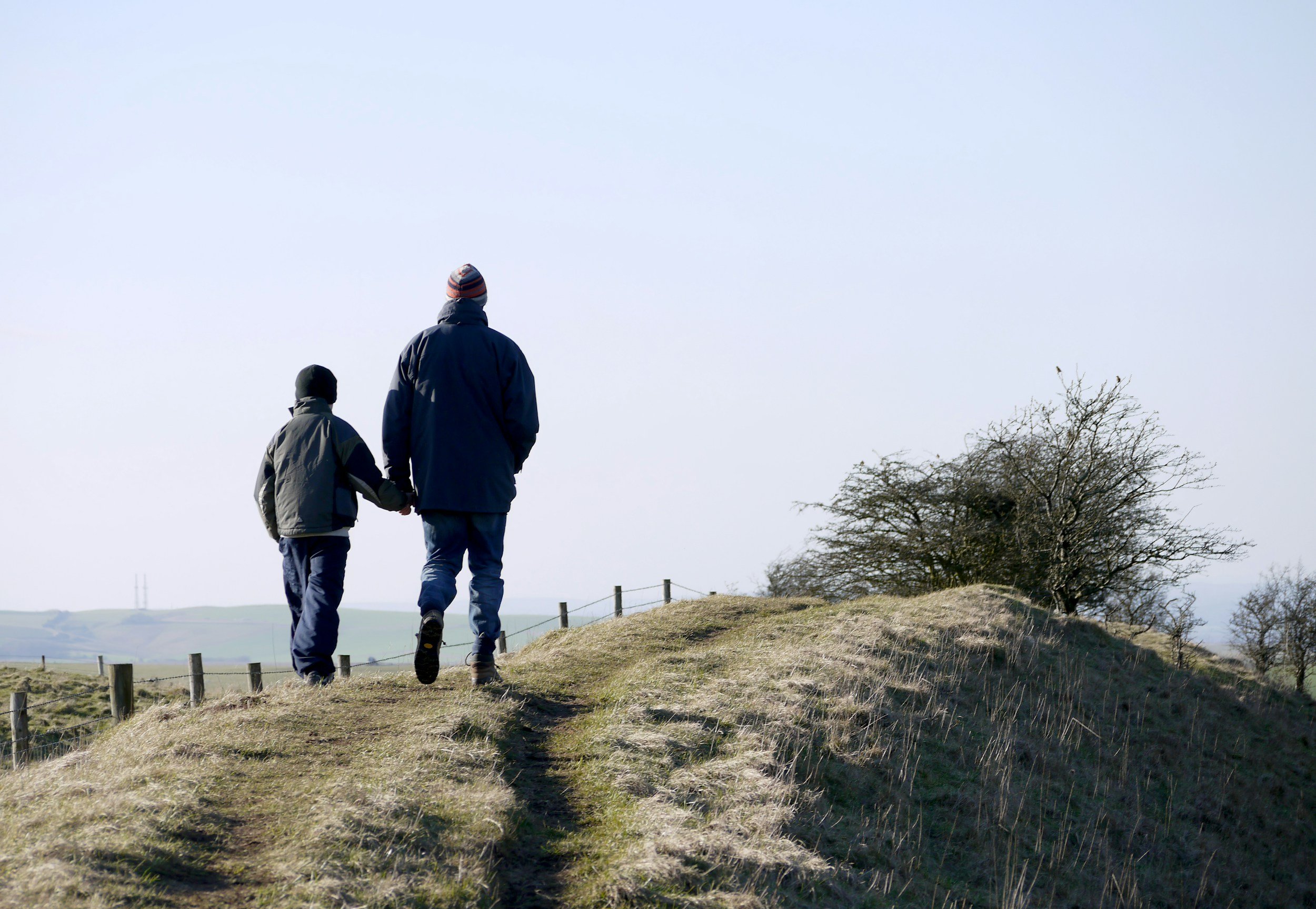
Why do people adopt when there are so many unknowns? It is a fair question, and it is a personal one. For me, the answer comes down to a reality that applies to almost every meaningful decision in life: risk and reward are rarely separated.
When we made the decision to adopt our sons, we knew there were uncertainties. We knew there would be questions we could not fully answer. What I know now, decades later, is that the reward did not merely outweigh the risk. The reward became our life.
Key takeaways
Adoption involves real unknowns, including medical history, genetics, and early life experiences.
Parenthood always involves unknowns, whether a child joins your family by birth or by adoption.
The emotional reality of parenting is the same: the worry, pride, frustration, hope, and love all run just as deep.
Adoption changes more than one life. It reshapes parents, siblings, grandparents, friends, and the broader community around a child.
The decision often begins with uncertainty, but over time it becomes part of your identity, your history, and your future.
The biggest misconception about adoption is that it is only about what parents give. In many cases, adoptive parents receive just as much in return.
What adoption meant to us
Adoption is the decision to build a family through commitment, love, and responsibility rather than biology alone. What matters most after that decision is not the route by which a child entered your life, but the life you build together.
For us, adoption meant becoming parents. It meant stepping into a future we could only partly imagine and accepting that, like all parents, we would be learning as we went.
Why we chose adoption
The simplest answer is that we wanted to be parents.
That desire was stronger than the fear of what we did not know. At the time, the risks were real, but they sat in the background compared with the possibility of having children and building a family.
This is an important point because people often talk about adoption as if it is defined by uncertainty. That is true, but it is only half the story. The other half is that the hope of parenthood can be powerful enough to make uncertainty feel manageable.
In my experience, that is how many of the most meaningful decisions work. You do not move forward because every risk disappears. You move forward because the value of what is possible becomes bigger than the fear of what is unknown.
What makes adoption feel risky
Adoption comes with questions that may never be fully resolved.
There may be unknowns around:
medical history
genetic background
prenatal circumstances
early childhood experiences
emotional and developmental factors
family history you may never completely understand
Those are not small issues. Anyone thinking seriously about adoption should acknowledge them honestly.
But honesty matters in both directions. Parenthood by birth also comes with uncertainty. No parent gets a guarantee. No one gets complete control over health, personality, life outcomes, or hardship.
That does not erase the distinctive realities of adoption. It simply puts them in perspective. The presence of unknowns is not unique to adoption. It is part of parenting itself.
The reality after the decision
Once our sons became our sons, the categories that once seemed so important lost much of their emotional weight.
The worry was the same. The pride was the same. The frustration was the same. The hopes and fears were the same. The love was no different.
That is one of the hardest things to explain to someone who has not lived it. Before adoption, people naturally focus on process, paperwork, history, and difference. After adoption, family life becomes much more ordinary and much more profound at the same time.
There are school milestones. There are challenges. There are proud moments and difficult moments. There are the long stretches where life feels routine, and then there are the moments when you stop and realize how much one decision altered everything.
They are not our adopted sons. They are our sons.
How adoption changes a family over time
At the beginning, it is easy to think of adoption as a single event. In reality, it is more like the start of a lifelong unfolding.
One of the thoughts that never fully leaves me is this: What if we had not adopted them? What would their lives have looked like? What would ours have looked like?
That question is not rooted in regret. It is rooted in perspective. It reminds me that one decision changed the course of four lives forever.
And not just four lives.
Over the years, adoption shaped relationships and experiences far beyond our immediate household. Grandparents became grandparents. Extended family built bonds that otherwise would not exist. Friends, teachers, and eventually the people our sons would come to love all became part of a story that never would have happened without that original choice.
That is part of adoption that I do not think enough people understand at the beginning. You do not just change a child’s life. They change yours. Then, in ways you cannot predict, they change the lives of everyone they touch.
The lesson about risk and reward
If I had to summarize what adoption taught me, it would be this: some rewards are so large they do not fit inside the original calculation.
Early on, you weigh the pros and cons. You ask practical questions. You consider the emotional and financial responsibilities. You think through the risks, as you should.
But over time, the math changes.
The reward is not simply a positive outcome on the other side of a hard decision. The reward becomes your daily life. It becomes your memories, your traditions, your worries, your laughter, your identity, and your future.
That is true in personal finance as well as family life. The biggest decisions are rarely made with perfect certainty. Buying a home, starting a business, changing careers, becoming a parent—none come with guarantees. What matters is whether the long-term meaning justifies the short-term uncertainty.
For us, it did.
Common misconceptions about adoption
There are a few misunderstandings about adoption that are worth addressing directly.
Adoption is too uncertain to consider
Adoption does involve uncertainty, but so does every path to parenthood. The better question is not whether uncertainty exists. The better question is whether you are prepared to love, commit, adapt, and parent through uncertainty.
Adoptive families are somehow different in the fundamentals
Every family has its own story, but the essentials of parenting do not change. Love, responsibility, concern, sacrifice, pride, and fear are not weaker or less real in an adoptive family.
Adoption is only about helping a child
Adoption can absolutely transform a child’s life, but that is not the whole picture. It also transforms the parents, the extended family, and the entire network of relationships around that child.
Once the adoption is complete, the emotional work is over
The legal process may end, but parenting continues. Adoption is not a finish line. It is the beginning of family life, with all the growth and complexity that implies.
Questions people often ask about adoption
Is adoption worth the risk?
For me, yes. The risks were real, but the reward was greater than anything I could have understood at the beginning. That does not mean the journey is easy. It means the meaning of it can be far larger than the uncertainty attached to it.
Does adoption feel different from having biological children?
Every parent-child relationship is unique, but the core emotions of parenting feel the same. The worry, love, pride, and responsibility are not diminished because a child entered your family through adoption.
What is the hardest part of adoption?
One of the hardest parts is accepting that there may always be pieces of a child’s background you do not fully know. That requires humility, patience, and a willingness to parent without having every answer.
What is the most meaningful part of adoption?
For me, it is seeing how one decision created an entire world of relationships, memories, and love that otherwise would not exist. The impact extends far beyond the first moment of becoming a family.
Should people avoid adoption because of unknown medical or family history?
No one should ignore those realities, but they should not assume that certainty is available through other paths to parenthood either. The responsible approach is to understand the risks, ask good questions, and move forward only if you are prepared for the responsibilities of parenting.
What I would say to someone considering adoption
If you are considering adoption, be honest about the unknowns. Do not minimize them, and do not let anyone pressure you into pretending they do not matter.
At the same time, do not assume that unknowns are a reason to walk away automatically. Ask yourself the deeper question: What are you building your life toward?
If your goal is to remove all risk, parenthood will humble that goal quickly. If your goal is to build a family with love, commitment, and endurance, adoption may be one of the most meaningful decisions you ever make.
Choose with open eyes. Choose with patience. Choose with humility. But do not overlook the possibility that the life waiting on the other side of that decision may be bigger, richer, and more beautiful than anything you can currently measure.
Final thoughts
Two children entered our lives and changed far more than our household. They shaped our world, our history, and our future. They created memories, relationships, laughter, challenges, pride, and love that simply would not have existed otherwise.
That is what adoption has meant to us.
It began as a decision involving risk. It became a life defined by reward.
And if there is one truth I would leave you with, it is this: you may begin adoption thinking about how you might change a child’s life, but in the end, they change yours too.